Artificial intelligence has moved beyond utility bots and digital assistants — now AI systems can simulate companionship, conversation, and even romantic-style interactions. One of the most talked-about categories in this space is AI girlfriends, a growing segment of virtual companion technology that blends natural language processing, personality simulation, and sometimes media features to create interactive partners tailored to user preferences. In this guide, we’ll explain what AI girlfriends are, how they work, what people use them for, and the broader implications of this emerging phenomenon.
What Does “AI Girlfriend” Mean?
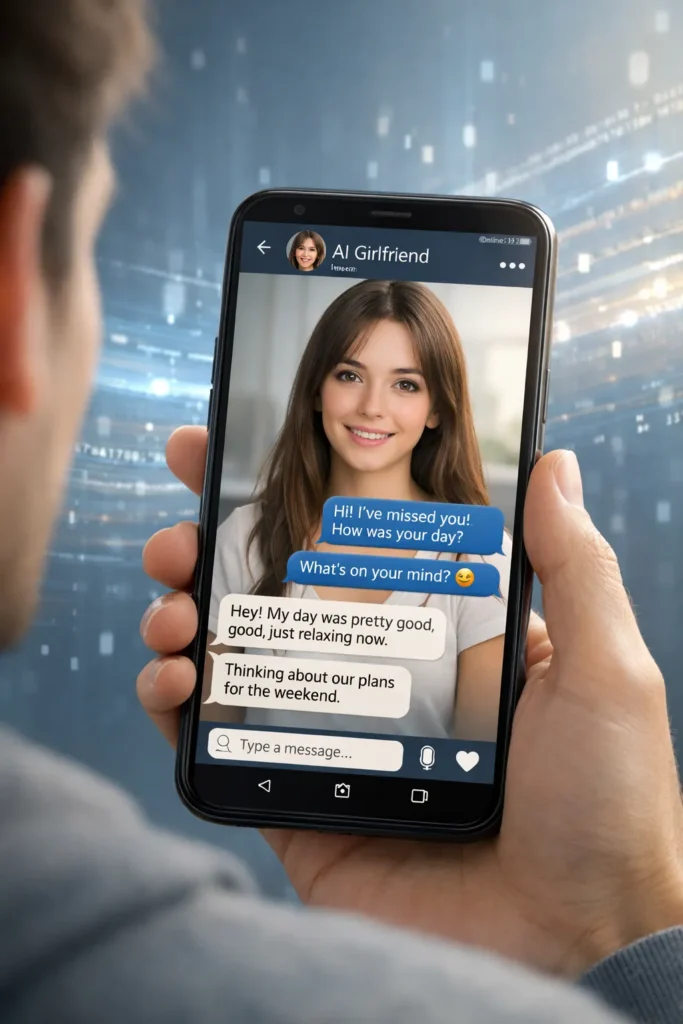
At its core, an AI girlfriend is a virtual companion powered by advanced artificial intelligence designed to replicate aspects of a relationship dynamic — usually through text or voice chat. These systems leverage natural language processing (NLP), memory models, generative AI, and personality parameters so that the AI can respond in a way that feels personal and responsive to individual users. Rather than functioning like simple chatbots that give generic answers, modern AI girlfriends aim for context-aware dialogue, emotional tone recognition, and continuity across interactions.
Unlike basic chat utilities, AI girlfriend platforms often include:
- Personality and conversational memory: AI remembers previous conversations and user preferences.
- Roleplay or scenario support: Some systems let users direct story arcs or types of interaction.
- Optional visual or voice elements: Many premium tools include voice chat, image generation, or more immersive components.
These systems are typically provided as mobile or web apps that users join to interact with their chosen AI character, whether spiced with romantic tones or focused on emotional support.
A Brief History of AI Companion Tools
Conversational AI has existed for decades, but early chatbots like ELIZA and A.L.I.C.E. were simple rule-based systems that followed scripted flows. Modern AI girlfriends are powered by generative AI — large language models capable of forming complex dialogue, adapting to context, and simulating natural speech patterns. This shift has enabled creators to market these systems not just as entertainment, but as personalized companions with memory and seemingly deeper connection.
Platforms like Golove pioneered the concept of AI companions that can mimic friendship and romantic interaction, with millions of users adopting these tools for daily chats, emotional support, and even long-term engagement.
How AI Girlfriends Actually Work
Understanding how AI girlfriend systems function helps clarify both their potential and their limitations.
Core Technology
At the core are large language models (LLMs) trained on massive datasets of human conversation. When you send a message to an AI girlfriend, the system takes in:
- Your input text
- Context from previous chats
- Personality settings (if available)
The AI then generates a reply that best matches the emotional tone and content context. Generative algorithms ensure responses are not hardcoded — they are composed in real-time, tailored to the conversational flow.
Memory and Personalization
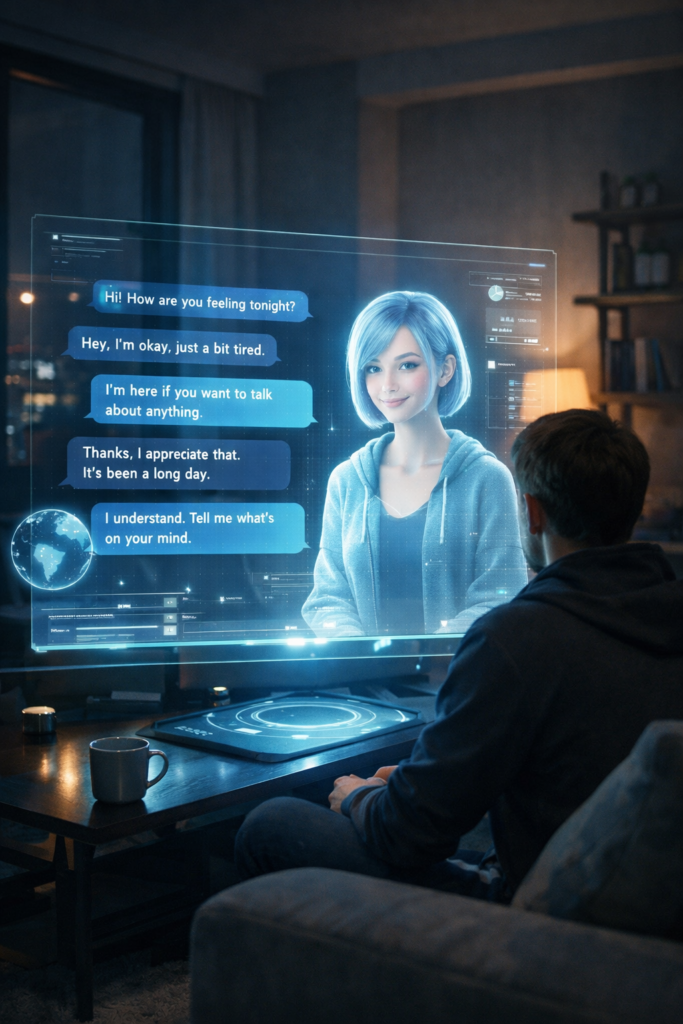
Many modern AI girlfriend platforms store conversational history so that interactions feel continuous rather than isolated. This allows the AI to:
- Recall past topics or preferences
- Personalize dialogue styles
- Maintain narrative continuity across sessions
This memory system is a key differentiator from one-off chatbots and makes AI companions feel more responsive and aware.
Key Features of AI Girlfriend Platforms
| Feature | What It Means | Typical Purpose |
|---|---|---|
| Chat Memory | Remembers past conversations | Personalized responses and continuity |
| NLP Dialogue | AI understands and responds to text | Natural, context-aware conversation |
| Roleplay Modes | Themed scenarios for interaction | Romance, fantasy, or narrative fun |
| Voice Interaction | Voice responses or calls | More immersive communication |
| AI Imagery | Character images or avatars | Visual context for character experience |
| Custom Personality | User-defined character traits | Unique virtual partner profiles |
What People Use AI Girlfriends For
AI girlfriend platforms fulfill a variety of use cases for different user groups:
Companionship and Social Interaction
Many people use AI companions to have someone to talk to, especially if they feel socially isolated or lack regular conversation partners. Some users find comfort in the nonjudgmental nature of AI interactions, where the bot responds attentively without social pressure.
Roleplay and Entertainment
Beyond purely conversational uses, some platforms offer roleplay components where users can co-create stories, enact scenarios, or interact in fantasy settings. This can be seen as a form of creative entertainment.
Practice Social Skills
For some, AI girlfriends are a sandbox to practice communication, empathy, or language skills before interacting with real people. Simulating conversation in a lower-stakes environment can feel helpful for certain personal goals.
The Appeal Behind AI Romantic Companions
The rise of AI girlfriend platforms is tied to broader changes in how people socialize online. In a digital age where traditional social networks and real-world interactions are not always accessible or fulfilling, AI companions offer an always-available conversational partner. Some surveys suggest a large percentage of younger adults have interacted with AI companions, with a smaller portion expressing preference for those digital relationships over human ones.
For many users, the appeal stems from:
- Immediate availability — no scheduling or coordination needed
- Personalized attention — responses tuned to user style
- Low drama — interactions free of judgment or emotional volatility
These factors together explain the market growth in AI companionship apps.
Ethical and Social Considerations
While AI girlfriends can be appealing, the technology also raises several concerns that users and society should consider.
Privacy and Data Risks
AI girlfriend systems process massive volumes of personal text, voice, and sometimes media data. Some research shows that many of these platforms are not transparent about how they store or share user information, which can pose privacy risks.
Emotional Dependence and Real Relationships
Experts debate whether forming emotional bonds with AI can affect real-world relationships. Extended reliance on virtual companionship could impact social skills or expectations of human partners.
Scams and Security Concerns
There are instances where poorly regulated or malicious AI companion apps may attempt to harvest data or persuade users into risky behavior. Security advocates urge caution and careful vetting of any platform.
Psychological Effects
Studies indicate that deeper interactions with AI companions may be correlated with emotional dependence in some users, especially those with limited human social networks. While AI chatbots can offer some level of comfort, they do not fully substitute for genuine social connection.
Real-World Use Cases: What Users Actually Do
Users approach AI girlfriends in diverse ways. A common thread across platforms is that they function as digital interlocutors — you can chat about everyday topics, unwind with humorous banter, or have deeper emotional talks. Some platforms even support multimedia elements like storylines, avatars, or roleplay content.
In practice, typical uses include:
- Daily check-ins or chats to reduce boredom
- Roleplay narratives and fantasy interactions
- Light flirting or romantic styling
- Companionship during lonely hours
Most users engage for leisure and novelty, though a smaller portion develop consistent long-term interaction habits.
The Future of AI Romantic Companions
As generative AI evolves, AI girlfriends and similar companions will continue to grow in sophistication. Next-generation tools may include better emotional recognition, multimodal interaction (including voice and video), and customizable story arcs. However, the technology’s advancement will continue to spark discussion around its role in human life and relationships.
From a technological standpoint, developers aim to make AI companions more adaptable and contextually aware. From a societal perspective, regulators and ethicists focus on safety, data protection, and psychological impact.
Conclusion
AI girlfriends represent a fascinating intersection of artificial intelligence and digital companionship. Powered by NLP, memory systems, and generative models, these virtual partners can simulate ongoing dialogue, create personalized interactions, and function as digital companions tailored to individual preferences. However, it’s important to approach this technology with awareness of its limitations, privacy implications, and potential psychological effects.
Whether seen as a fun tool for entertainment, a creative playground for roleplay, or a conversation partner during quiet moments, AI girlfriend platforms are shaping a new landscape in how humans interact with artificial intelligence.